
The $500 Tip: Why I Audit My Competitors
In the modern service economy, we are obsessed with the what. We track food costs to the third decimal point, we obsess over Labor-to-Sales ratios, and we treat our POS data like a holy relic. But in this clinical pursuit of efficiency, many operators have forgotten the how. They have perfected the transaction while inadvertently killing the hospitality.
When I tell fellow restaurateurs that I regularly perform a deep-dive audit of my competitors, they often assume I’m looking at their menu pricing or their seating rotation. While those metrics matter, they aren’t the reason I recently left a $500 tip on a $150 check at a rival bistro three blocks away.
I wasn’t paying for the steak frites. I was paying for the epiphany.
The Strategy of the Ghost Guest
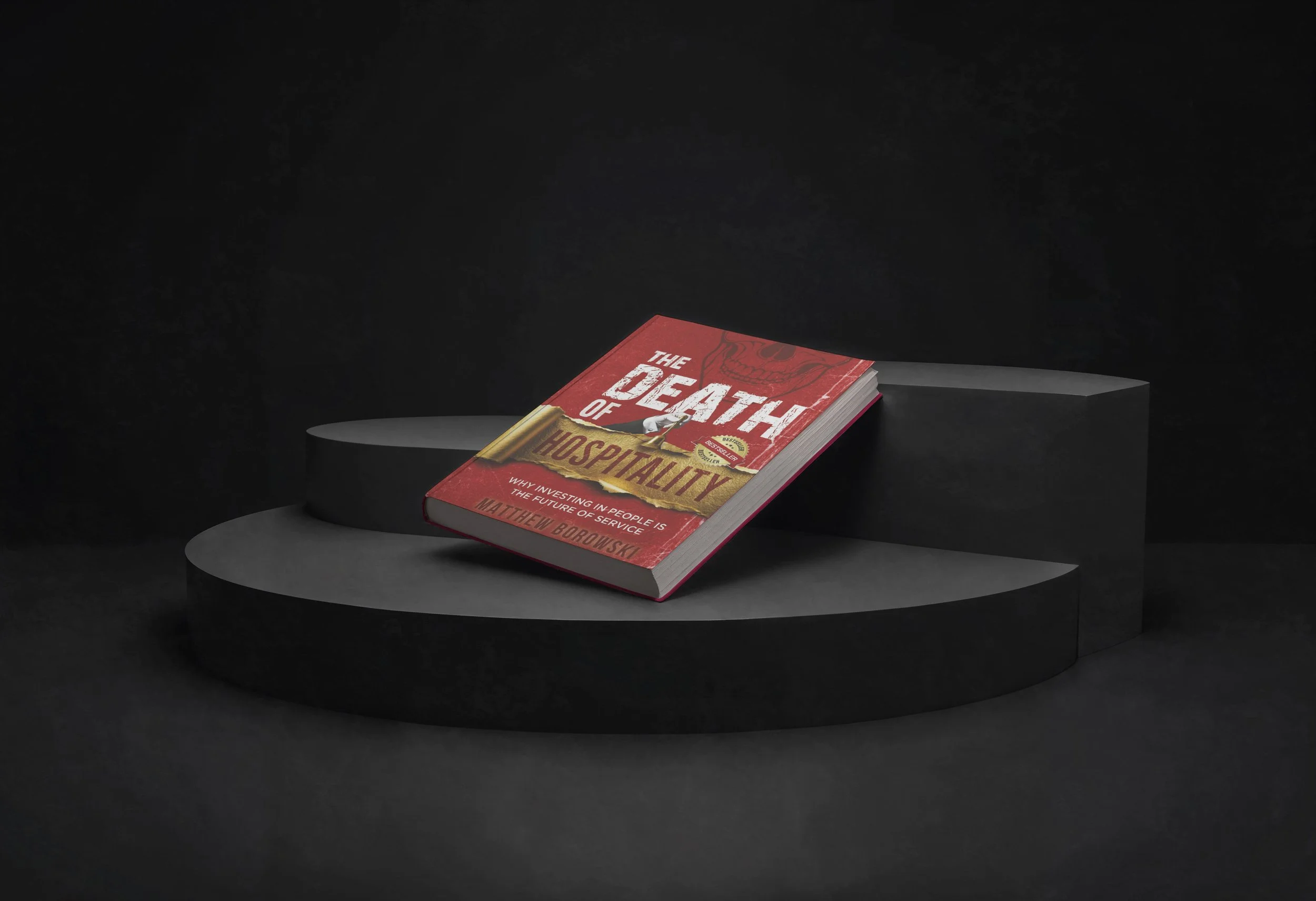
In my book, The Death of Hospitality: Why Investing in People is the Future of Service, I argue that genuine care is being replaced by automation. To fight this trend, you cannot simply look inward. You have to step outside your own four walls and experience the industry as a vulnerable guest.
When you audit competitors, you aren't just scouting. You are performing a diagnostic on the state of human connection in your neighborhood. Here is why this practice is the most vital exercise for any operator who refuses to let hospitality die.
1. Identifying the Efficiency Traps
The most dangerous thing a business can do is benchmark itself against a failing standard. If every restaurant in your district has moved to QR-code-only ordering, and you do the same, you haven't optimized—you’ve just joined the race to the bottom.
When I audit a competitor, I look for where the frictionless experience actually causes emotional friction.
Does the host look up from the iPad when I walk in?
Is the server upselling based on a script, or suggesting based on my preferences?
Does the automation feel like a tool for the guest, or a shield for the staff?
By seeing where others have traded soul for speed, you identify the exact gaps where your business can win on humanity.
2. Calibrating the Value of the Invisible Extra
Why should I audit my competitors if my numbers are good? Because numbers don't tell you about the ‘Invisible Extra.’ This is the moment a server remembers a guest’s name from a visit three months ago, or the way a bartender slides a glass of water to a patron before they even ask.
In my recent audit, that $500 tip wasn't an act of charity; it was a reward for a masterclass in intuition. The server noticed I was dining alone and preoccupied. Instead of the standard, robotic "How is everything tasting?", she adjusted her cadence. She provided space when I needed it and warmth when I looked up. She practiced hospitableness—the virtue—rather than service—the sequence of events.
If I hadn't been there to witness it, I wouldn't have known how much my own team had drifted into sequence mode.
How to Audit Competitors Without Losing the Point
A true hospitality audit isn't a spreadsheet; it’s an ethnographic study. If you want to know why you should audit your competitors, look at these three pillars:
| Audit Pillar | What You Are Looking For | The Hospitality Impact |
|---|---|---|
| The Welcome | Eye contact, physical stance, and the “First 30 Seconds.” | Does the guest feel expected or like an interruption? |
| The Recovery | How do they handle a mistake (cold food, wrong drink)? | Is the solution a refund (transactional) or an apology (relational)? |
| The Farewell | The final touchpoint after the bill is paid. | Does the hospitality end the moment the credit card clears? |
3. Breaking the Echo Chamber
As owners, we suffer from ‘Founder’s Myopia.’ We walk through our own dining rooms and see what we expect to see. We see the lightbulb that needs changing or the smudge on the window, but we are often blind to the energy of the room because we created it.
Auditing a competitor forces you into the shoes of the disposable guest. When you sit in a competitor’s chair, you realize how annoying a wobbly table actually is. You realize how a 10-minute wait for a check feels like an eternity when the "hospitality" has already evaporated.
This perspective is a cold bucket of water. It prevents the slow rot of complacency.
The Death of Hospitality vs. The Audit
We are currently living through a period where Hospitality is being redefined as Delivery. Apps have convinced us that as long as the food arrives warm and the order is correct, the job is done. But that isn't hospitality; that’s logistics.
When you audit competitors, you are searching for the survivors of this trend. You are looking for the ‘Old Guard’ and the ‘New Radicals’ who still believe that a table is a sacred space for human connection.
I gave that $500 tip because that server did something a machine will never do: she made me feel seen. In an era of ‘The Death of Hospitality,’ being seen is the ultimate luxury. If your competitors are failing to provide that, it’s an opportunity. If they are succeeding at it, it’s a lesson.
Why Every Manager Needs to Leave the Building
If you aren't sending your managers out to eat at the competition once a month, you are failing them. You cannot teach someone to be a host if they never get to be a guest.
I tell my team: "Go find someone doing it better than us. Find the place that makes you feel more at home than our own dining room. Then, come back and tell me how they did it."
This isn't about copying a menu item. It’s about infectious culture. If a competitor has found a way to keep their staff engaged and joyful in a high-pressure environment, that is a competitive advantage that no marketing budget can overcome.
The Final Tally
The Death of Hospitality isn't an inevitable tragedy; it's a choice we make every time we prioritize a KPI over a person.
Why should I audit my competitors? To remind myself what it feels like to be a guest. To identify the cold, transactional habits creeping into the industry. To find the sparks of genuine care that still exist and bring that fire back to my own hearth.
The next time you walk into a rival establishment, don't look at the decor. Look at the eyes of the guests. Are they staring at their phones, or are they leaning in toward each other? The answer to that question will tell you more about the future of your business than any P&L statement ever could.
Hospitality is a dying art, which makes its practitioners more valuable than ever. Go out there, find the ones who are doing it right, and tip them like your business depends on it—because, in a way, it does.

Are you ready to reclaim the soul of your service? If you believe that hospitality is more than just a transaction, you aren't alone. Join the movement to bring genuine care back to the forefront of the industry.
Visit the official Death of Hospitality website at https://www.deathofhospitality.com/ to explore more insights, grab a copy of the book, and join our community of service-driven professionals.
